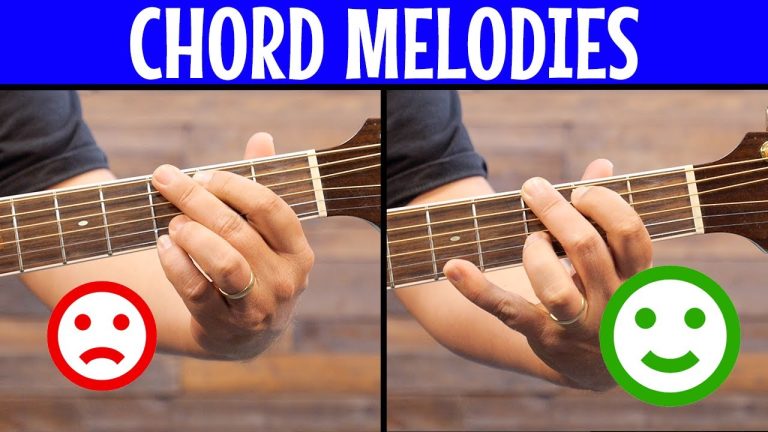
If you’ve been playing open chords for a while and want something that sounds richer and more interesting, drone notes are one of the best tricks you can add to your playing. In the video above, we’ll walk through how to use drone strings in the key of E major to get a full, resonant sound that works with both acoustic and electric guitar.
What Are Drone Notes?
A drone is a note that rings continuously while other notes or chords change around it. Think of it like a pedal tone — one or two strings stay open and constant while your other fingers move through different chord shapes.
On guitar, this works especially well because of how the instrument is tuned. Certain open strings naturally fit with certain keys, giving you built-in drone notes without any extra effort.
Why E Major Is Perfect for This
In the key of E major, your two best drone strings are the 1st string (open E) and the 2nd string (open B). E is your tonic — the home note of the key. B is the fifth, which creates what’s called a “perfect” interval. That’s important because a perfect fifth doesn’t pull the sound toward major or minor. It just sounds strong and open. That means those two strings can ring through almost any chord in the key without clashing.
How to Set It Up
The basic idea is simple: take your bar chord shapes in the key of E major, but instead of barring all six strings, only fret the lower strings (4th, 5th, and 6th) and let the top two strings ring open.
For root-6 shapes (like E major, F# minor, G# minor, A major), you’re fretting strings 6 through 3 and leaving strings 1 and 2 wide open. For root-5 shapes (like C# minor or B major), you’ll fret strings 5 through 3 — and you might want to mute the low E string, though since E is your tonic, it can actually sound great ringing through too.
The Chords You Can Use
Here’s where it gets fun. Every chord in the key of E major works with this technique:
- E major — your home base, sounds huge with the drones
- F# minor — root-5 shape at the 2nd fret
- G# minor — root-6 shape at the 4th fret
- A major — root-6 shape at the 5th fret
- B major — root-5 shape at the 2nd fret (power chord territory)
- C# minor — root-5 shape at the 4th fret
Move through these shapes while keeping those top two strings ringing and you’ll hear how rich and full it sounds. It’s almost like having a 12-string effect.
Tips for Making It Sound Clean
The biggest challenge is making sure your fretting fingers don’t accidentally mute the open strings. Keep your fingers arched and be deliberate about which strings you’re pressing down. It takes a little practice, but once you get the feel for it, you’ll find yourself reaching for this technique all the time.
This works on both acoustic and electric, though acoustic tends to really shine with drones because of the natural resonance. On electric with some reverb or delay, it sounds incredible too.
If you want to take this further, try experimenting with other keys that have useful open strings — A major and D major both work well. And if you’re looking for more ways to make simple chords sound better, check out our lessons on chord embellishments and making two strings sound amazing.
For more chord lessons and techniques, head over to our Guitar Chords hub.